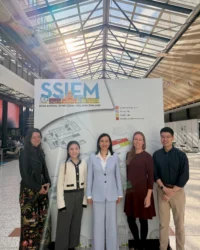
From 25 to 28 August, we attended the annual symposium of the Society for the Study of Inborn Errors of Metabolism (SSIEM) in Helsinki, Finland. Our participation included a multidisciplinary session bringing together leaders from the regulatory, nonprofit, philanthropic and clinical fields to explore patient access to innovation, alongside a poster session showcasing our work on patient experience and patient organisations as co-creators.
Co-chaired by Cary Harding (Oregon Health & Science University, USA) and Kirmo Wartiovaara (University of Helsinki, Finland), the session focused on a central challenge in rare diseases: how to translate years of scientific progress into treatments that are clinically available, affordable and sustainable. Organised with the SSIEM Helsinki and the Citrin Foundation, the programme brought together regulatory, clinical, patient, philanthropic and nonprofit-development perspectives. Speakers highlighted how systems designed for larger patient populations often struggle to accommodate rare diseases. Discussions focused on more flexible evidence requirements, proportionate regulation, innovative funding models and stronger patient involvement.
Janet Woodcock: Accelerating access to orphan drugs through regulatory innovation
Former Principal Deputy Commissioner, U.S. Food and Drug Administration, USA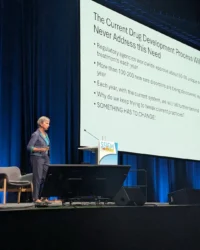
Janet Woodcock presented that conventional, drug-by-drug development cannot keep pace with the scale of rare disease. With thousands of recognised disorders and more emerging each year, incremental adjustments will not close the treatment gap. She proposed defining genetic diseases through a molecular taxonomy, grouping conditions by the defect a therapy is designed to correct rather than by historical syndrome names or symptoms. This could make platform development more practical for approaches such as antisense oligonucleotides, gene therapy and gene editing.
Her wider recommendations were to approve individualised treatments through validated platforms rather than one product at a time; avoid underpowered randomised controlled trials and use rigorous alternatives such as external controls, Bayesian approaches or self-controlled studies; scale manufacturing requirements to the size and risk of the programme; and create shared repositories for clinical, toxicology and failure data. Drawing on mutation-based cancer indications, CAR-T therapies and personalised vaccines, she stressed that these ideas have precedents. Her message was direct: fundamental, modular modernisation is necessary, so no patient group is to be left behind.
Kristina Larsson: Recent EU regulatory developments and useful tools for orphan drug development
Head of Orphan Medicines, European Medicines Agency, Netherlands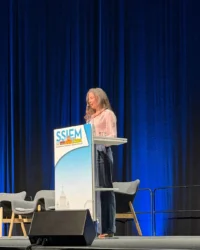
Kristina Larsson briefly outlined existing EU support for orphan-medicine development, including designation incentives, scientific advice and early engagement with regulators. She urged developers to plan studies around regulatory, and patient needs so that scarce data and samples produce evidence that can support approval.
Her main focus was the proposed new EU pharmaceutical legislation. This would strengthen support for not-for-profit organisations, enable evidence-led repurposing and introduce an exceptional regulatory sandbox for innovations that do not fit existing pathways. She stressed that the sandbox would test adaptations in a controlled, time-limited setting without lowering standards or providing a simplified route to approval. She also highlighted platform marketing authorisation, combining pre-defined fixed and variable components for different variants or rare diseases. Her closing message was to engage regulators early, collaborate internationally, involve patients and make every study count.
Barbara Yu: Economic realities and the case for patient-centered orphan drug access models
Co-Founder and President, Citrin Foundation, UK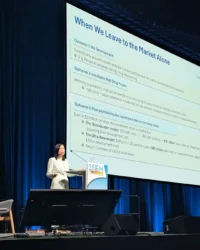
Barbara Yu argued that economics is increasingly a greater obstacle than science in rare diseases. Development and manufacturing costs do not fall in proportion to patient numbers, while marketing authorisation does not guarantee reimbursement or uptake. For ultra-rare conditions, this can mean no development, unsustainably high prices or commercial withdrawal even when a treatment is scientifically possible. She therefore called for a shift from patient protection alone towards patient empowerment through a “Declaration of Helsinki for rare diseases”.
Her proposal centred on a dedicated nonprofit regulatory pathway with proportionate, fit-for-purpose evidence requirements, tailored manufacturing standards and conditional approval while further evidence is gathered. She paired this with automatic reimbursement for qualifying therapies through transparent cost-plus-reinvestment pricing and instalment payments, supported by a public-private insurance fund for complications. Early philanthropic or mission-driven capital would absorb development risk, with any reinvestment margin funding further treatments. She also called for mutual recognition between major regulators to reduce duplication and extend access across small, globally dispersed patient populations.
Ilaria Villa: From research to approval: a non-profit development and distribution model for rare disease gene therapies
Chief Executive Officer, Fondazione Telethon, Italy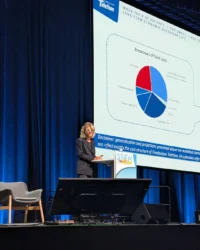
Ilaria Villa described Fondazione Telethon’s evolution from a research funder to a therapy developer and, in some cases, a marketing-authorisation holder. While the organisation has helped bring several gene therapies to patients, she highlighted the ongoing challenge of sustaining treatments for very small populations, where regulatory, manufacturing and pharmacovigilance costs can significantly exceed revenue.
Strimvelis illustrated the challenge: even with a lean, industrial-quality platform, the cost of maintaining the product substantially exceeded its revenue. Telethon uses transparent pricing to cover ongoing costs, but Ilaria stressed that a charity cannot indefinitely subsidise national health systems. Nonprofit ownership can preserve access after a commercial withdrawal, but sustainable reimbursement, development pathways that reduce the capital at risk, and distribution platforms designed for very small populations are still needed.
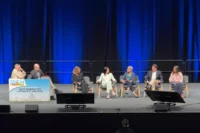 Janet, Kristina, Barbara and Ilaria were joined by clinician-scientist Julien Baruteau (Great Ormond Street Institute of Child Health, University College London, UK). The discussion highlighted how current systems can favour larger populations and strand scientifically promising ultra-rare programmes. Platform-based authorisation emerged as a major opportunity, with panellists discussing how manufacturing, delivery and safety elements could be standardised across therapies. However, they agreed that evidence of efficacy must remain disease-specific and grounded in each patient’s clinical reality.
The discussion also linked approval to implementation. Julien highlighted the UK Innovative Licensing and Access Pathway, which brings the regulator, health-technology assessor and health service together early so evidence, affordability and delivery can be planned in parallel. Across the panel, recurring priorities included sharing negative as well as positive data, applying proportionate manufacturing controls, reforming reimbursement and respecting patient-defined risk–benefit choices. Participants also discussed the possibility of building wider support for a Helsinki-style consensus statement on rare-disease access, although no consensus was reached during the session.
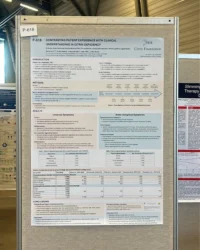
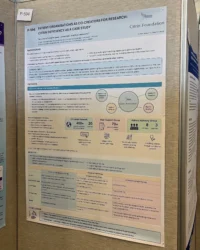
Alongside the main session, the conference also featured two poster presentations: “Contrasting Patient Experience with Clinical Understanding in Citrin Deficiency”, based on our published paper (Asami et al., 2026), and “Patient Organisations as Co-creators for Research: Citrin Deficiency as a Case Study”. Both posters highlighted the importance of listening to patient perspectives, building meaningful partnerships and ensuring that lived experience helps shape research priorities in citrin deficiency and other rare diseases. Thank you to everyone who stopped by our posters and contributed to the conversations.