Citrin Foundation and University Children’s Hospital Zürich Launch First Center for Translational Research in UCD
Published 8:00 AM BST, May 22, 2025
Pioneering translational model combines cutting-edge science, clinical leadership, global collaboration, and a patient-first mission to unlock new therapies
LONDON, UNITED KINGDOM, May 22, 2025 / EINPresswire.com / — The Citrin Foundation and the University of Zürich, together with the UZH Foundation, today announced the launch of the world’s first center dedicated entirely to translational research in urea cycle disorders (UCDs). Hosted at the Children’s Research Center of the University Children’s Hospital Zürich, the initiative represents a transformative step in bridging the gap between discovery and delivery in rare diseases—by building a model designed for translation from day one.
Scientific advances in rare disease research are progressing at an unprecedented rate—but translation into real-world therapies remains the exception, not the norm. Promising innovations often stall in the so-called “valley of death” between the lab and the clinic, due to fragmented systems, dispersed patients, limited funding and infrastructure, and a lack of aligned strategy. The “UCD Translational Center Universität Zürich – Citrin Foundation” is purpose-built to overcome these barriers.
With a CHF$10 million commitment over ten years from Citrin Foundation, the Center is uniquely positioned to turn potential into progress in one of the most pressing frontiers of rare metabolic disease. UCDs currently have no curative treatments beyond liver transplantation—but new therapeutic modalities, including gene therapy, are on the horizon. The challenge is making them real.
Barbara Yu, Co-Founder and President of Citrin Foundation, said:
“The science is moving fast—but unless we build the infrastructure to carry it forward, patients won’t see the benefit. This Center brings together the right people, the right environment, and the long-term commitment needed to bridge that gap. It’s about funding and accelerating thoughtful and patient-focused research that will reach the clinic, making a real difference in their lives.”
A Translational Strategy for UCDs: From Mechanism to Medicine
The Center will address the full spectrum of urea cycle disorders, using citrin deficiency—a complex, monogenic condition and a UCD—as a launchpad for translation. These conditions share overlapping metabolic mechanisms and clinical profiles, making them ideal for a shared translational strategy focused on clinical relevance and cross-disease applicability —helping to create critical mass, as each disease affects only a small number of patients.
Under the direction of Professor Johannes Häberle, a clinician scientist and global leader in urea cycle disorders and inherited metabolic diseases, who is uniquely positioned to lead such translational effort, the Center is hosted at the Research Center of the University Children’s Hospital, Zürich, which has the state-of-the-art facilities and a strong research background in metabolic diseases. It will pursue high-impact, translational priorities including:
- Multi-omic biomarker discovery
- Liver metabolic function research
- Development of novel therapies, including gene therapy
- Clinical trial readiness
Professor Johannes Häberle, Center Director, said:
“We’ve made enormous scientific strides in recent years, but to make a difference for patients, we need to bring discovery and delivery closer together. This Center is structured to do exactly that—through rigorous science, thorough clinical understanding, global collaboration, and shared commitment.”
A Model for Translational Progress in Rare Disease
More than a research programme, this Center is a strategic solution to the rare disease translation gap. It integrates discovery, development, infrastructure, and patient engagement into one coordinated ecosystem—with translation as its driving force from inception.
Professor Sir John Walker, Nobel Laureate and Chairman of the Scientific Supervisory Board, Citrin Foundation, said:
“This Center exemplifies how science should serve medicine: by ensuring discoveries are not only made but applied meaningfully. What is being built here in Zürich has the potential to transform the way we think about translating complex biology into clinical solutions.”
Yen How Tai, Co-Founder of Citrin Foundation, added:
“This Centre is a blueprint for how rare disease research can and should work. We’re combining focused science with systems thinking, and making the long-term investment needed to align discovery, infrastructure, and patient voices from the start. We hope this becomes a model that others can adapt—creating lasting change across the rare disease field.”
Launch and Global Leadership
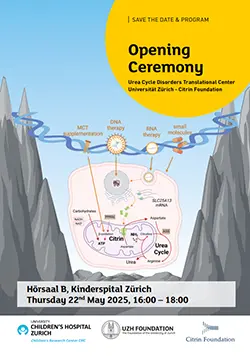
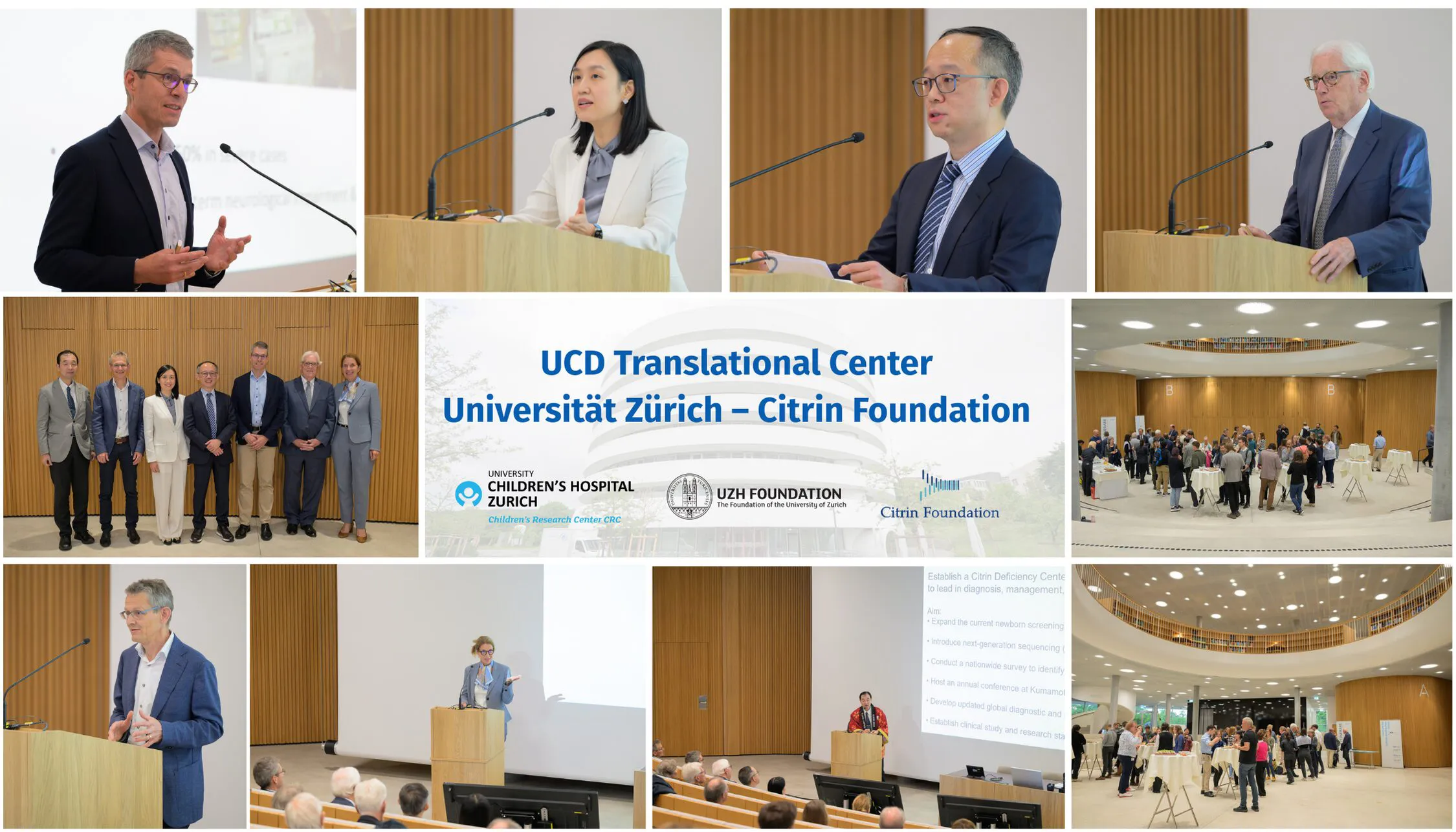
The Center will be launched officially at an event in Zürich on 22 May 2025, featuring international leaders in translational research, science, medicine, and rare disease advocacy, including:
- Barbara Yu and Yen How Tai, Co-Founders, Citrin Foundation
- Professor Johannes Häberle, Center Director
- Professor Sir John Walker, Nobel Laureate and Chairman, Scientific Supervisory Board, Citrin Foundation
- Professor Kimitoshi Nakamura, Director, Center of Excellence for Citrin Deficiency, Kumamoto University, Japan
The participation of global scientific and clinical leaders reflects the Center’s ambition to drive international progress in translational science in rare diseases, starting with UCDs.