On 12–13 May 2026, the Citrin Foundation participated in the International Drug Repurposing Conference (iDR) in Brussels, Belgium.

The two-day conference brought together representatives from patient organisations, industry, regulatory bodies, clinical research, and drug development groups to explore how drug repurposing can benefit patients with rare diseases.

Sharing the Foundation’s Approach to Drug Repurposing

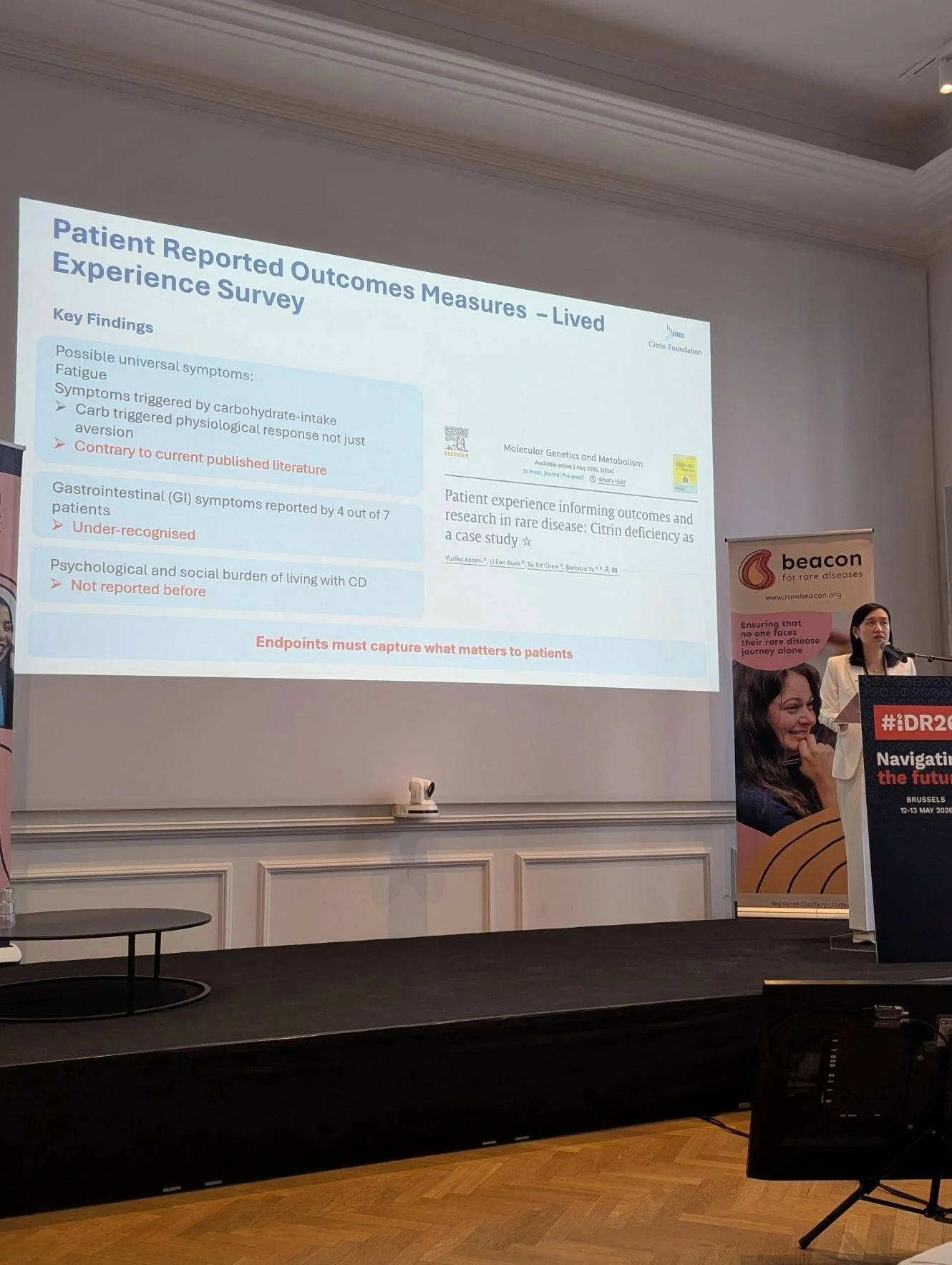
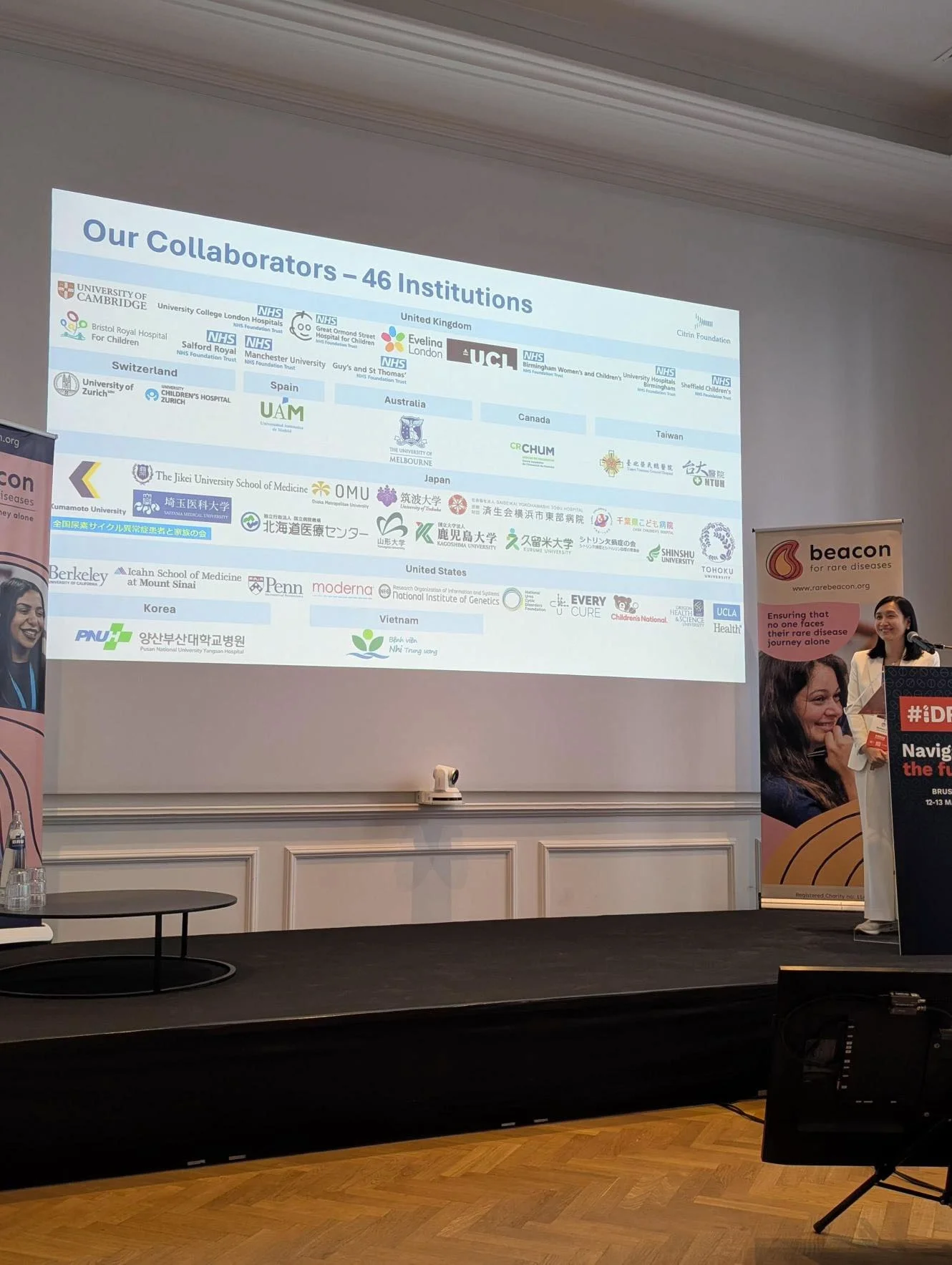
Barbara Yu, Co-Founder and President of the Citrin Foundation, presented during the session “RARE II – New Approaches to Drive Repurposing Research in Rare Diseases”.

Her presentation, “From Advocate to Architect: How a Patient Organisation Built an Ecosystem for Rare Disease Drug Repurposing”, explored how patient organisations can play an active role in shaping and accelerating rare disease drug repurposing.

The session focused on the need for novel strategies to move repurposing research forward in rare diseases. Speakers discussed how collaboration, innovation, and patient leadership can help bridge the gap between research and new treatments, ensure clinical trials measure outcomes that matter to patients and support future patient access.

Other speakers in the session included:

  • Megan Burley, Beacon: for rare diseases
  • Guillaume Canaud, Hôpital Necker–Enfants Malades, Université Paris Cité
  • Dariusz Adamczewski, Children’s Tumor Foundation Europe
  • Marc Buyse, IDDI — International Drug Development Institute, CluePoints and One2Treat

Ensuring Therapies Reach Patients

Barbara also spoke as a panellist in “Patient Engagement Panel – Having a Drug Isn’t Enough”.

This panel explored why patient involvement must continue beyond the development of a therapy. Discussions highlighted how patient communities are helping to shape research priorities, drive access initiatives, and ensure that treatments reflect real patient needs.

The session highlighted that clinical trials of potentially beneficial drugs can fail if the endpoints (pre-determined desired outcomes) selected by clinicians or researchers don’t capture outcomes or benefits that matter to patients. It is therefore essential for researchers to gather holistic information about the challenges of living with specific conditions, and for patients to be involved in defining what clinical trial success looks like.

Panellists included:

  • Rick Thompson, Beacon: for rare diseases
  • Alessandra Tolaccia, OIFE — Osteogenesis Imperfecta Federation Europe
  • Nadiah Hanim Abdul Latif, Malaysian Rare Disorders Society
  • Matthew Baker, Hypersomnolence UK

Takeaway

The Foundation’s participation in iDR 2026 reflects our continued commitment to advancing patient-led research, building cross-sector partnerships, and supporting innovative approaches that may accelerate therapeutic development for citrin deficiency and other rare diseases. Achieving this will require meaningful engagement with the citrin deficiency patient community, whose insights into life with the condition and aspirations for new therapies are essential to ensuring our work remains relevant and impactful.